A unique natural resource has developed in Ukraine – more than 1 million hectares of self-seeded forests. These are abandoned agricultural lands that have become overgrown with trees over recent decades. Transferring these plots to the forest fund is the cheapest and most environmentally friendly way to increase the country’s forest cover. However, due to economic factors and bureaucratic obstacles, these ecosystems remain unprotected and are often lost.
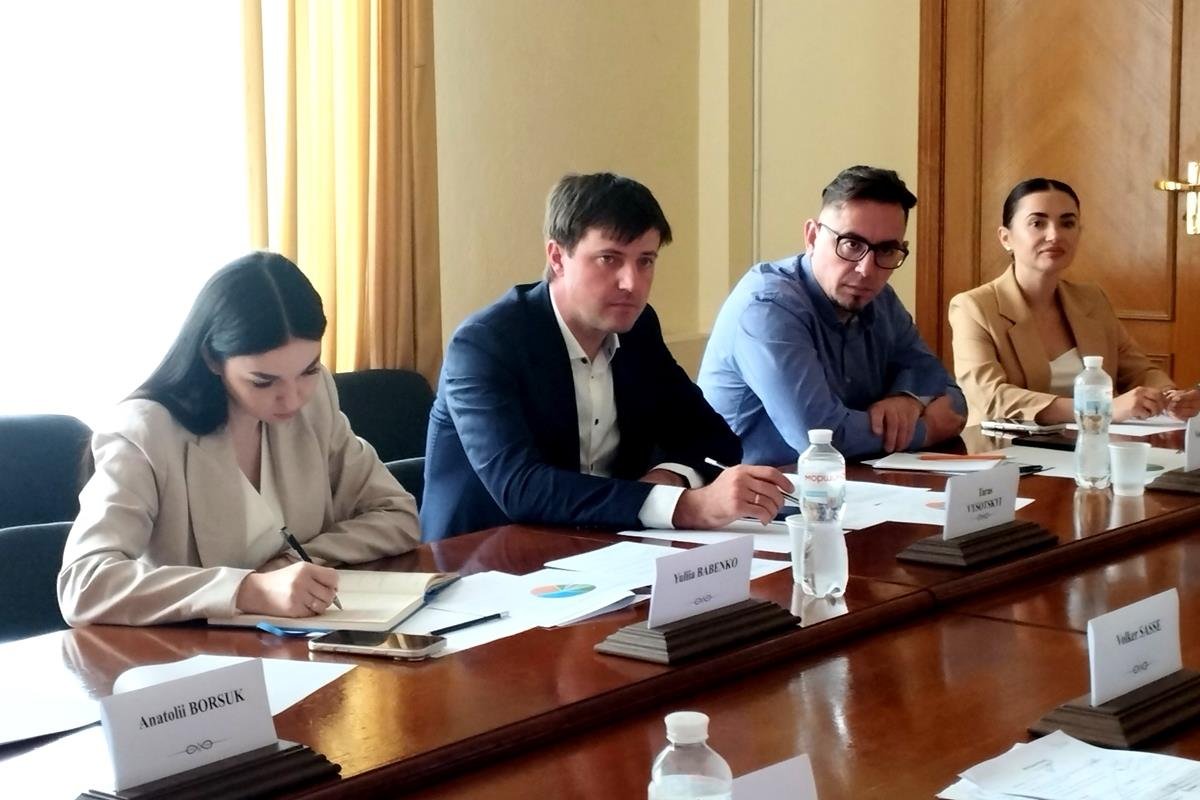
Discussions on how to integrate European practices for the conservation of self-seeded forests took place during a meeting between Taras Vysotskyi, Deputy Minister of Economy, Environment and Agriculture of Ukraine, and German partners of the ‘Promotion of Multi-functional Sustainable Forest Management Planning and Implementation in Ukraine’ (SFI) project.
In European practice, particularly in Germany, the management of self-seeded forests is very clearly regulated. Over the last 30 years, the total forest area in that country has increased by more than 200,000 hectares (forests now cover 32 per cent of the country’s territory). Of this, 55 % has come about through natural regrowth on abandoned agricultural land and military training grounds. If uncultivated plots become naturally overgrown with trees, they officially acquire the status of forest once certain criteria are met. To ensure that landowners do not lose their economic interest, the state operates a system of financial support. This provides for compensation for the costs of tending young plantations, annual payments for lost income from agricultural use of the land, as well as incentives for preserving forests as natural carbon sinks.
Such forests are better adapted to local conditions, are more resilient to droughts and windstorms, and are less expensive than artificial afforestation.
“Self-seeded forests are a significant environmental and financial resource for the regions. To turn this into a real economic asset, we need to resolve legislative inconsistencies: harmonise the provisions of the Land and Forest Codes regarding communal forests and simplify the transitional status of such lands,” noted Taras Vysotskyi.
The German experience is important for shaping a Ukrainian model for managing self-seeded forests. The search for solutions is part of a comprehensive reform of the forestry sector. Germany actively supports Ukraine on this path. The cooperation is facilitated by the German Federal Ministry of Agriculture, Food and Regional Identity. It has been ongoing since 2017, when a corresponding technical assistance programme was launched as part of the ‘German-Ukrainian Agricultural Policy Dialogue’. The SFI project is now in its second year of implementation and is scheduled to run until September 2027.
The project is helping Ukraine to solve three further major challenges in reforming the forestry sector:
- Adaptation to EUDR requirements: bringing Ukrainian legislation into line with the EU Regulation on the prevention of deforestation, which requires full digital traceability of the origin of timber for export.
- Forest inventory: the development of remote sensing technologies for forests (satellite imagery) with the support of a special SFI programme, which the German side has funded to replace equipment lost as a result of the war.
- Greening of forestry: the transition from Soviet-era clear-cutting practices to close-to-nature forestry.
The meeting was attended by Volker Sasse, international SFI project leader, and Yvonne Gall, First Secretary and Adviser on Agriculture, Food and Regional Identity, the German Embassy in Ukraine.