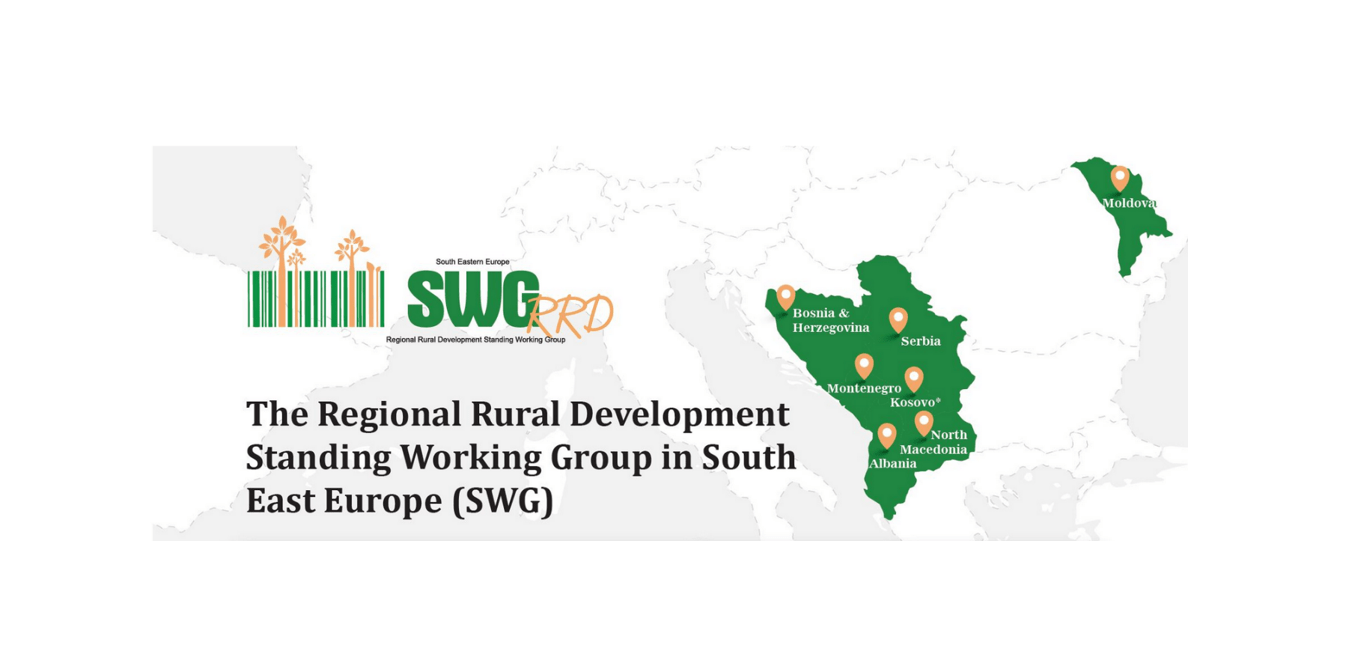
The 10th Meeting Sets Priorities for Sustainable Forest Management in the Western Balkans took place 19-21.11.2025 in Skopje, North Macedonia. The activity was supported by the Agriculture Policy Dialogue (APD) project Germany-Southeast Europe. The meeting brought together regional experts from Western Balkan countries to discuss priorities and common challenges for future cooperation in light of ongoing EU approximation.
Manfred Fischer (GFA Consulting Group) opened the discussion by addressing the ongoing alignment with EU acquis related to sustainable forest management. He emphasized the importance of understanding each country’s current position and identifying the common elements that can guide regional efforts.
Regional expert Nenad Petrović highlighted that all EU acquis chapters relevant to forestry are being addressed across the region. He underlined that the degree of alignment varies by country, making it crucial to monitor progress and timelines closely. He also stressed the need to define top priorities through a detailed analysis, including potential gaps in Chapter 27 (Environment and Climate Change), particularly where implementation challenges and cross-cutting issues may arise.
Torsten Möllmann, Head of the Services Division at HessenForst, shared insights from the German experience with EU environmental and climate policies related to forests. He noted that Germany’s situation differs from other countries, as forestry is often less visible within the EU agenda. Despite this, a key unifying point across all EU countries is the active management of forests. He also pointed out the existence of data gaps and inconsistencies in terminology, which can affect policy harmonization.
The discussion underscored the need for continued cooperation, targeted gap analysis, and improved data harmonization to support the region’s alignment with EU requirements and advance sustainable forest management.
Appointed national experts from Albania, Federation of Bosnia and Herzegovina, Republic of Srpska, Bosnia and Herzegovina, Kosovo, North Macedonia, Montenegro, Serbia exchanged views with regard to the
- definition of priorities and common issues for regional cooperation
- integration of climate change adaptation into sustainable forest management policies and practices
- development of regional guidelines for forest biodiversity monitoring and improvement.
Volker Sasse, Team Leader of the forestry project in Ukraine, presented an overview on forest policy requirements in the Context of the EU accession process of Ukraine. With regard to an efficient project implementation he highlighted the needs of the target countries as a primary subject of consultancy and suggested to put the focus on the interests of partner organisations in the target countries. He mentioned several key needs from forest land use:
- Prioritizing forest protection, including safeguarding biodiversity and enhancing resilience to climate change.
- Ensuring timber supply and supporting rural employment, driven by market opportunities and the need for economic recovery.
- Maintaining tax contributions to the state budget, reflecting the sector’s continued economic relevance.
Regarding the identification of needs for updating legislation in light of EU approximation he recommended to approach the EU COM offices.
The meeting concluded with:
- A discussion on the framework for forest-related methodologies, emphasizing the harmonization of data reporting, policy structures, and relevant legislation at both regional and international levels.
- A review of the Terms of Reference (ToR) for the new APD Sustainable Forest Management project, including its objectives, scope, key deliverables, and roles, presented by Ms. Bogdanka Gjorshoska, SWG Senior Project Manager.
- A summary and final definition of the framework and outline for strengthened regional cooperation moving forward.